基于mnn架构在本地 c++运行llm与mllm模型
MNN(Mobile Neural Network)是阿里巴巴集团开源的轻量级深度学习推理框架,为移动端、服务器、个人电脑、嵌入式设备等多种设备提供高效的模型部署能力。MNN支持TensorFlow、Caffe、ONNX等主流模型格式,兼容CNN、RNN、GAN等多种网络结构。MNN具备轻量性、通用性、高性能和易用性特点,能在不依赖特定硬件NPU的情况下运行大型模型,支持模型量化和内存优化技术,能
MNN(Mobile Neural Network)是阿里巴巴集团开源的轻量级深度学习推理框架,为移动端、服务器、个人电脑、嵌入式设备等多种设备提供高效的模型部署能力。MNN支持TensorFlow、Caffe、ONNX等主流模型格式,兼容CNN、RNN、GAN等多种网络结构。MNN具备轻量性、通用性、高性能和易用性特点,能在不依赖特定硬件NPU的情况下运行大型模型,支持模型量化和内存优化技术,能适应不同设备的算力和内存限制。MNN提供模型转换、压缩工具和丰富的API,让开发者能轻松地将深度学习模型部署到各种平台上。
https://ai-bot.cn/mnn/
本博文基于mnn框架实现mllm模型——qwen2vl的导出,并实现在c++下推理(调用cpu算力),23 token/s
1、基础环境安装
1.1 安装mnn等
参考 https://blog.csdn.net/HaoZiHuang/article/details/126146550 安装mnn,
安装命令 pip install -U MNN
pip install mnn -i https://pypi.tuna.tsinghua.edu.cn/simple
安装完毕之后,在命令行输入mnn,最后输出如下信息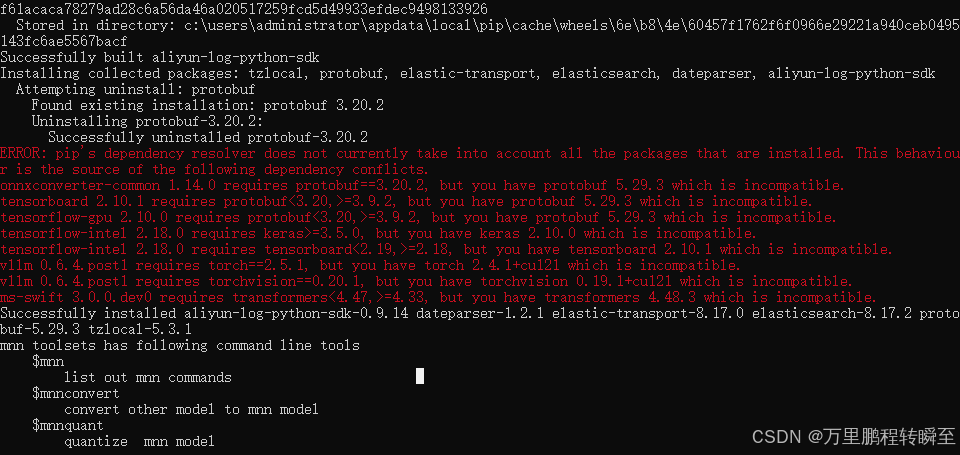
同时在windows环境下构建wsl linux环境,同步在linux环境里,安装mnn
1.2 编译安装mnn库
mkdir build
cd build

      # 自动检测CUDA架构(或指定具体架构如Maxwell, Pascal等)

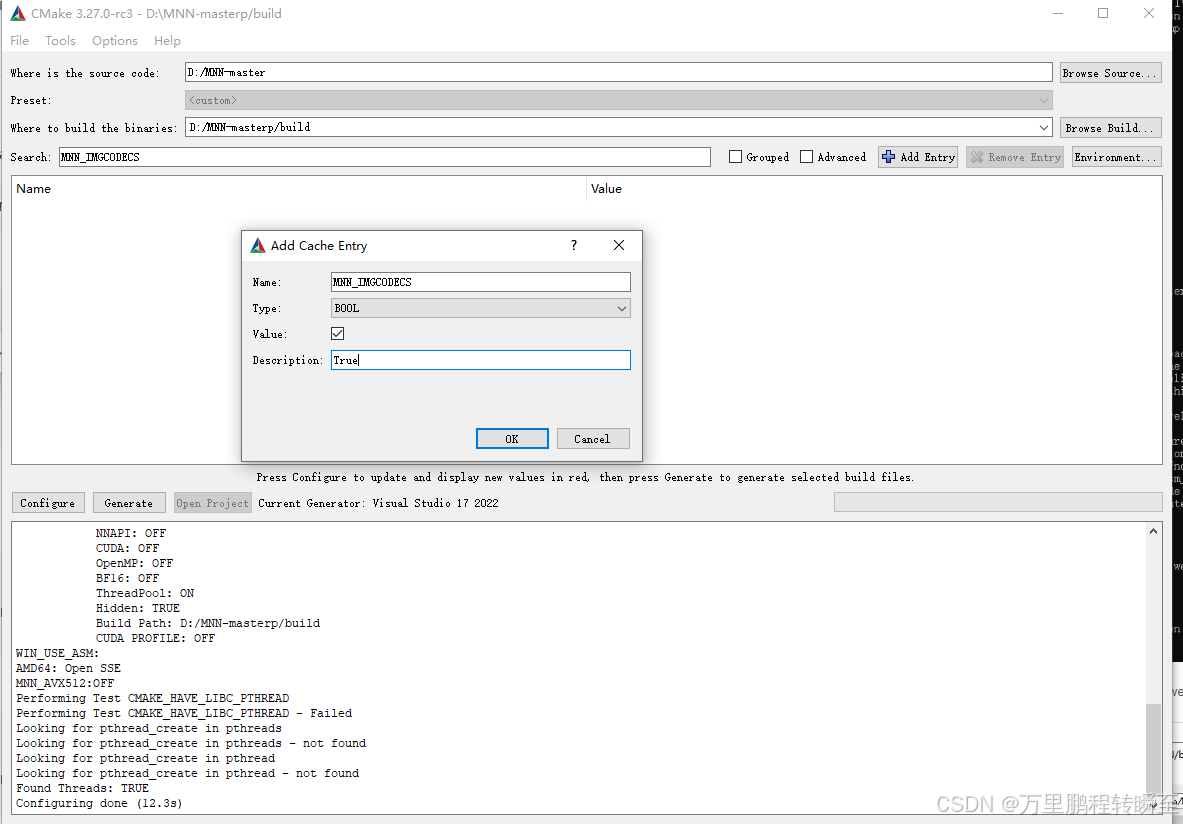
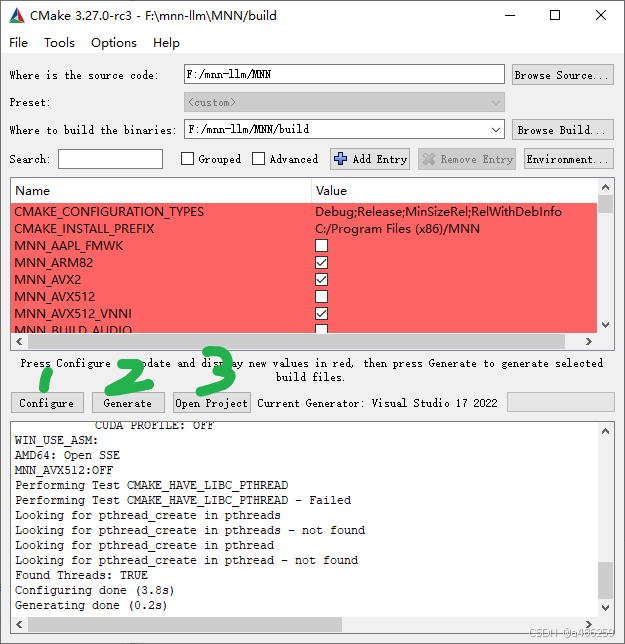
cmake ../ -DMNN_LOW_MEMORY=true -DMNN_CPU_WEIGHT_DEQUANT_GEMM=true -DMNN_BUILD_LLM=true -DMNN_SUPPORT_TRANSFORMER_FUSE=true  -DLLM_SUPPORT_VISION=true -DMNN_BUILD_OPENCV=true -DMNN_IMGCODECS=true
make -j16
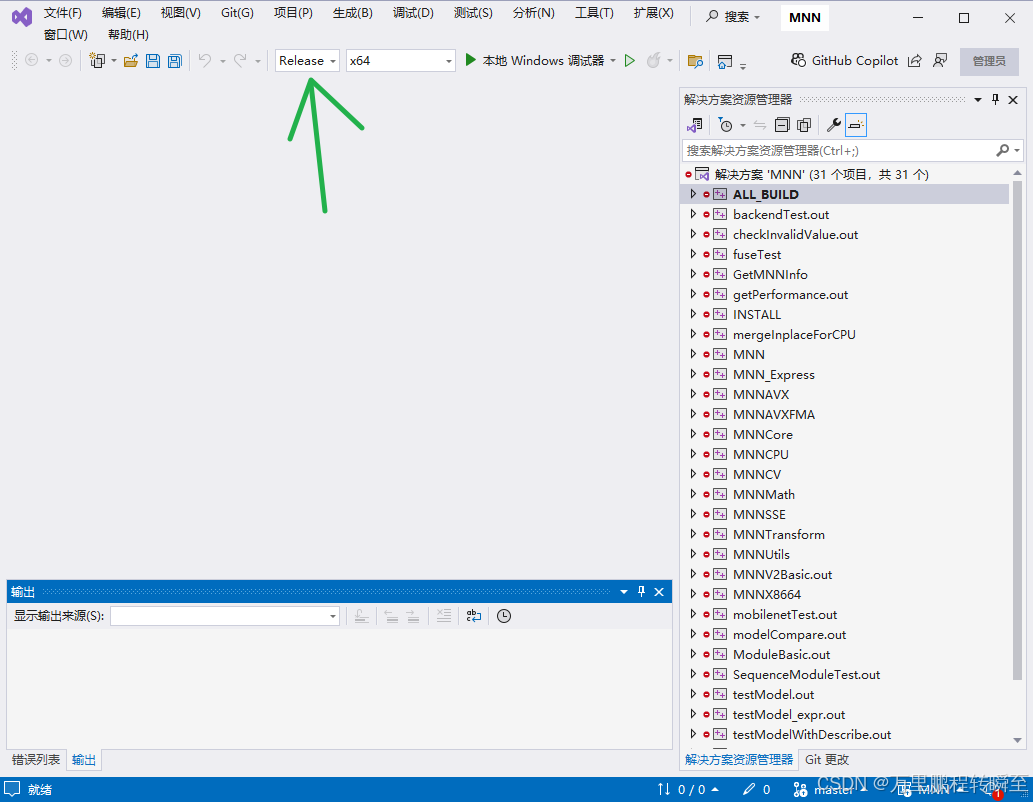
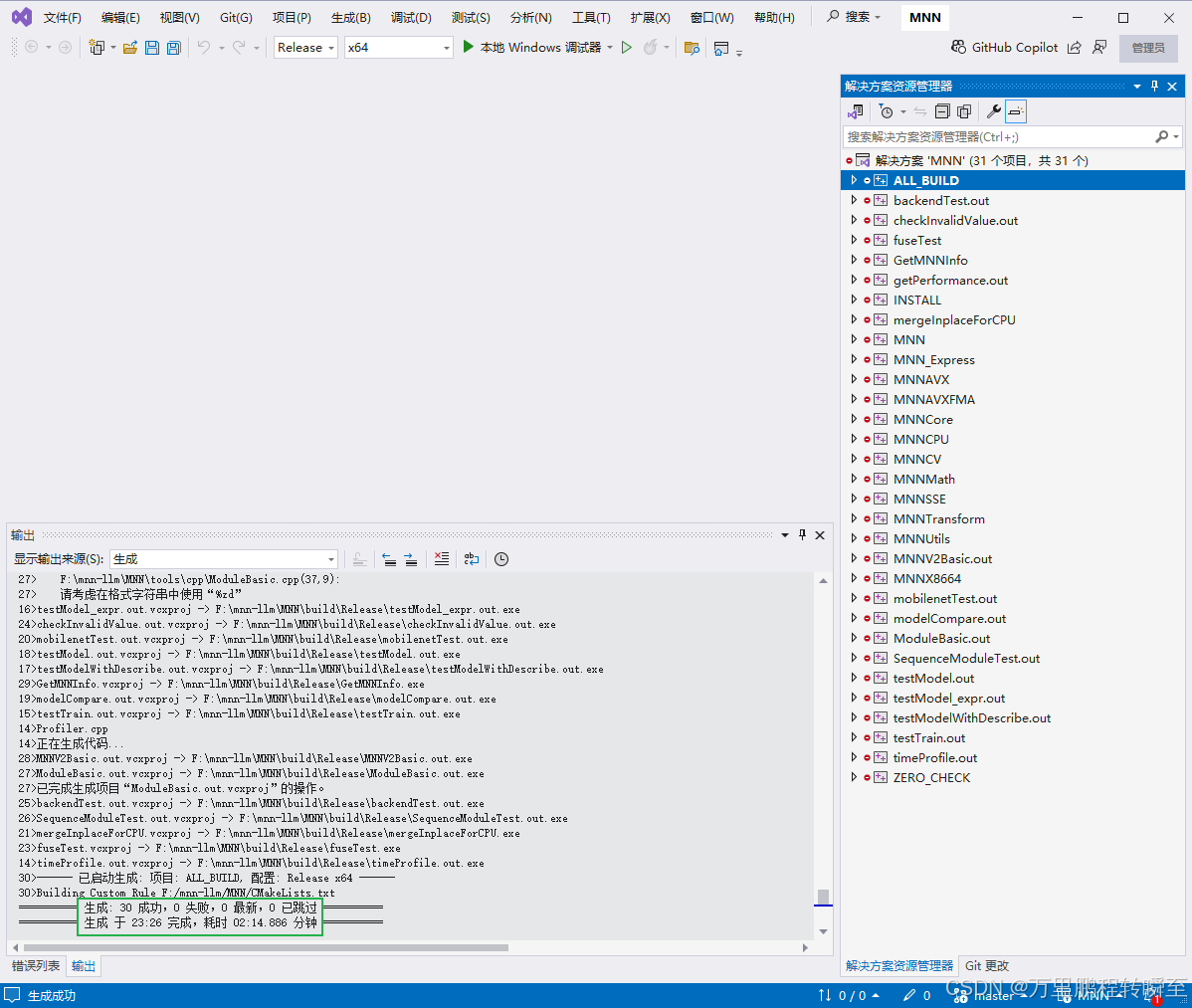
cmake --build . --config Release -- /m:64
https://github.com/alibaba/MNN/blob/master/docs/compile/cmake.md
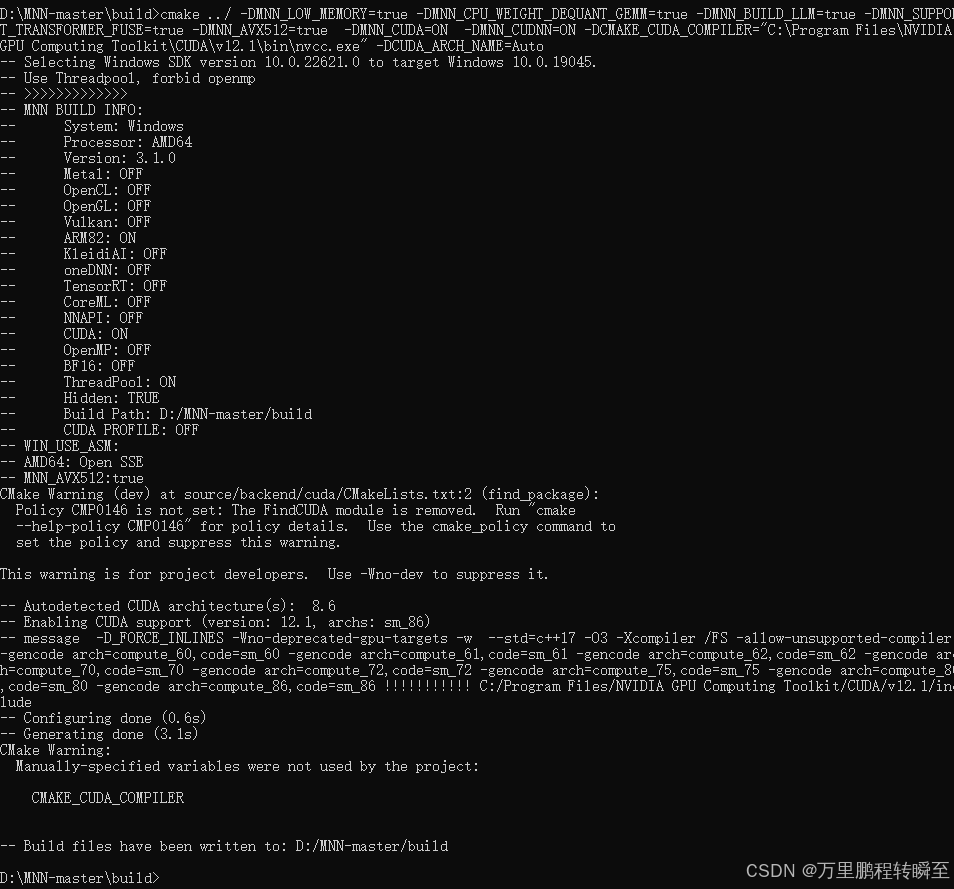
如果出现以下报错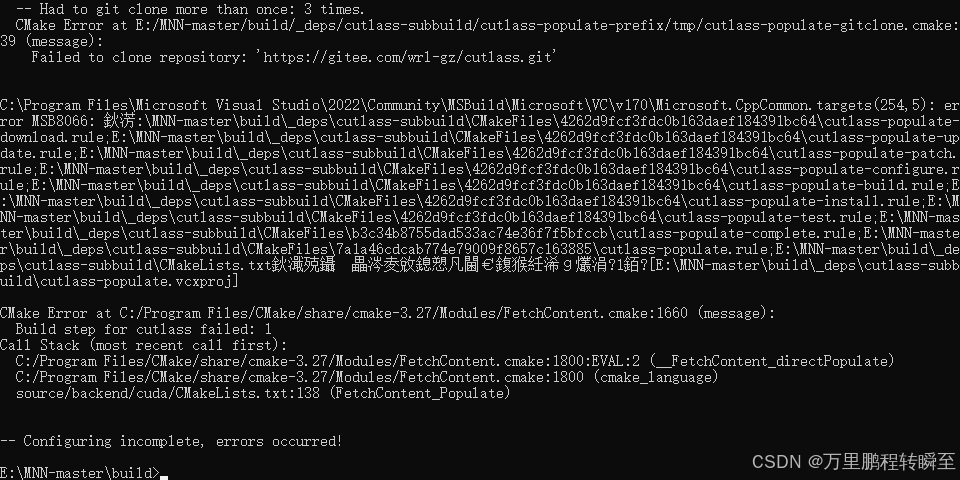
set(CUTLASS_SOURCE_DIR "${CMAKE_SOURCE_DIR}/3rd_party/cutlass/${CUTLASS_VERSION_NAME}")
FetchContent_Declare(
    cutlass
    GIT_REPOSITORY    https://gitee.com/wrl-gz/cutlass.git
    GIT_TAG           ${CUTLASS_COMMIT_HASH}
    SOURCE_DIR        ${CUTLASS_SOURCE_DIR}
)

set(CUTLASS_SOURCE_DIR "${CMAKE_SOURCE_DIR}/3rd_party/cutlass")
FetchContent_Declare(
    cutlass
    SOURCE_DIR        ${CUTLASS_SOURCE_DIR}
)
modelscope download --model Qwen/Qwen2.5-VL-3B-Instruct --local_dir ./big_model
1.3 安装mmn-llm(无关操作)
mnn-llm不能直接基于pip安装,需要进行源码编译安装依赖工具
步骤一 下载mnn-llm项目代码及其附属依赖( --recurse-submodules 指定下载依赖包)git clone --recurse-submodules https://github.com/wangzhaode/mnn-llm.git
如果附属依赖包没有下载好,可以单独执行git submodule update --init --recursive下载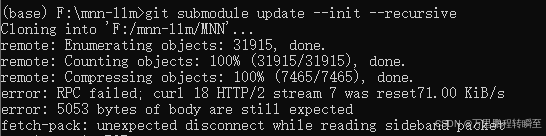
如果无法正常访问git,可以先进入mnn-llm目录,然后基于gitee下载依赖包git clone https://gitee.com/alibaba/MNN.git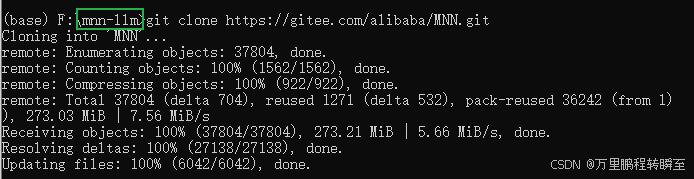
步骤二 编译安装,按照不同的环境执行命令
cd mnn-llm

# linux
./script/build.sh

# macos
./script/build.sh

# windows msvc
./script/build.ps1

# python wheel
./script/py_build.sh

# android
./script/android_build.sh

# android apk
./script/android_app_build.sh

# ios
./script/ios_build.sh
步骤三(windows安装) windows执行./script/build.ps1可能会不支持,可以打开PowerShell(没有该软件可以下载安装)执行以下命令:
mkdir build

Expand-Archive .\resource\win_pthreads.zip
cp .\win_pthreads\Pre-built.2\lib\x64\pthreadVC2.lib build
cp .\win_pthreads\Pre-built.2\include\*.h .\include\

cd build
cmake ..
cmake --build . --config Release -j 4
cd ..
最终的执行结果如下所示,这表明程序编译成功了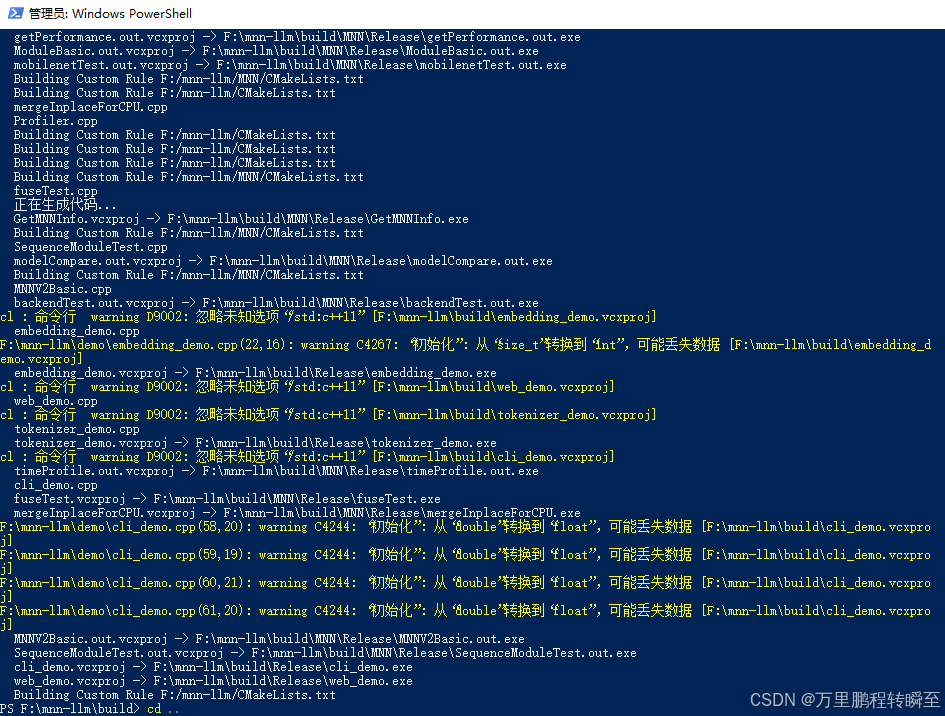
步骤四(python安装) windows执行./script/py_build.sh可能会不支持,可以打开PowerShell(没有该软件可以下载安装)执行以下命令:
mkdir build
cd build
cmake ..
make -j4
cd ..
2、运行模型
2.1 下载模型
基于以下命令可以下载模型
from modelscope import snapshot_download
model_dir = snapshot_download('qwen/Qwen2-VL-2B-Instruct',cache_dir=".cache_dir")
2.2 模型导出
需要在liunx环境下执行,windows环境可以安装wsl虚拟linux环境,然后安装torch等环境
linux下执行
pip config set global.index-url https://mirrors.aliyun.com/pypi/simple/

pip install onnx
pip install transformers
pip install yaspin
pip install mnn
导出模型的命令如下:
cd MNN/transformers/llm/export

python llmexport.py --path /mnt/f/DMT/.cache_dir/qwen/Qwen2-VL-2B-Instruct   --export mnn --quant_bit 8 --quant_block 128

模型默认导出到model目录下。
关于vit部分的量化,可以手动设置llmexport.py中的值。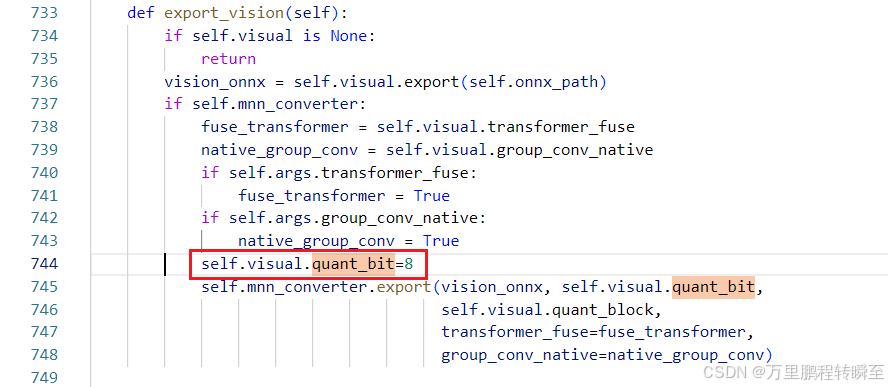
2.3 llm_demo推理
构建prompt.txt
#基于以下命令,可以将 命令写入txt
echo "<img><hw>280, 420</hw>https://qianwen-res.oss-cn-beijing.aliyuncs.com/Qwen-VL/assets/demo.jpeg</img>Describe the content of the image." > prompt.txt
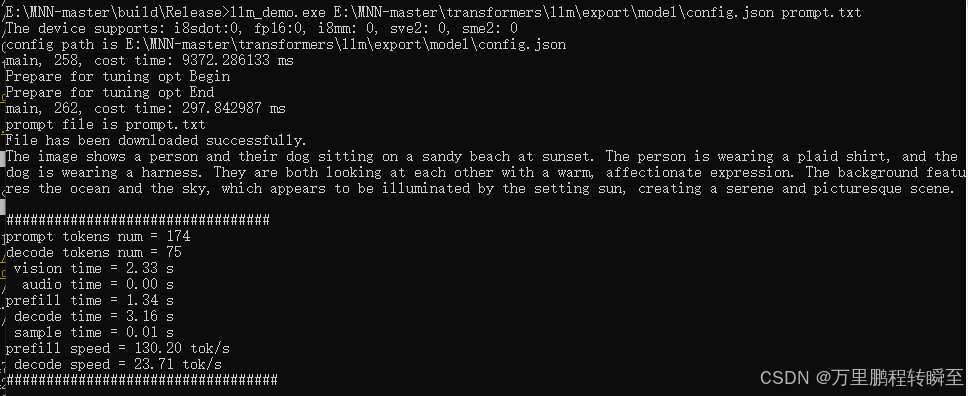
2.4 llm_demo.cpp
llm_demo对应源码 E:\MNN-master\transformers\llm\engine\demo\llm_demo.cpp
对应的cmakelist路径为: E:\MNN-master\transformers\llm\engine\CMakeLists.txt
//
//  llm_demo.cpp
//
//  Created by MNN on 2023/03/24.
//  ZhaodeWang
//

#include "llm/llm.hpp"
#define MNN_OPEN_TIME_TRACE
#include <MNN/AutoTime.hpp>
#include <MNN/expr/ExecutorScope.hpp>
#include <fstream>
#include <sstream>
#include <stdlib.h>
#include <initializer_list>
//#define LLM_SUPPORT_AUDIO
#ifdef LLM_SUPPORT_AUDIO
#include "audio/audio.hpp"
#endif
using namespace MNN::Transformer;

static void tuning_prepare(Llm* llm) {
    MNN_PRINT("Prepare for tuning opt Begin\n");
    llm->tuning(OP_ENCODER_NUMBER, {1, 5, 10, 20, 30, 50, 100});
    MNN_PRINT("Prepare for tuning opt End\n");
}

std::vector<std::vector<std::string>> parse_csv(const std::vector<std::string>& lines) {
    std::vector<std::vector<std::string>> csv_data;
    std::string line;
    std::vector<std::string> row;
    std::string cell;
    bool insideQuotes = false;
    bool startCollecting = false;

    // content to stream
    std::string content = "";
    for (auto line : lines) {
        content = content + line + "\n";
    }
    std::istringstream stream(content);

    while (stream.peek() != EOF) {
        char c = stream.get();
        if (c == '"') {
            if (insideQuotes && stream.peek() == '"') { // quote
                cell += '"';
                stream.get(); // skip quote
            } else {
                insideQuotes = !insideQuotes; // start or end text in quote
            }
            startCollecting = true;
        } else if (c == ',' && !insideQuotes) { // end element, start new element
            row.push_back(cell);
            cell.clear();
            startCollecting = false;
        } else if ((c == '\n' || stream.peek() == EOF) && !insideQuotes) { // end line
            row.push_back(cell);
            csv_data.push_back(row);
            cell.clear();
            row.clear();
            startCollecting = false;
        } else {
            cell += c;
            startCollecting = true;
        }
    }
    return csv_data;
}

static int benchmark(Llm* llm, const std::vector<std::string>& prompts, int max_token_number) {
    int prompt_len = 0;
    int decode_len = 0;
    int64_t vision_time = 0;
    int64_t audio_time = 0;
    int64_t prefill_time = 0;
    int64_t decode_time = 0;
    int64_t sample_time = 0;
    // llm->warmup();
    auto context = llm->getContext();
    if (max_token_number > 0) {
        llm->set_config("{\"max_new_tokens\":1}");
    }
#ifdef LLM_SUPPORT_AUDIO
    std::vector<float> waveform;
    llm->setWavformCallback([&](const float* ptr, size_t size, bool last_chunk) {
        waveform.reserve(waveform.size() + size);
        waveform.insert(waveform.end(), ptr, ptr + size);
        if (last_chunk) {
            auto waveform_var = MNN::Express::_Const(waveform.data(), {(int)waveform.size()}, MNN::Express::NCHW, halide_type_of<float>());
            MNN::AUDIO::save("output.wav", waveform_var, 24000);
            waveform.clear();
        }
        return true;
    });
#endif
    for (int i = 0; i < prompts.size(); i++) {
        auto prompt = prompts[i];
     // #define MIMO_NO_THINKING
     #ifdef MIMO_NO_THINKING
        // update config.json and llm_config.json if need. example:
        llm->set_config("{\"assistant_prompt_template\":\"<|im_start|>assistant\\n<think>\\n</think>\%s<|im_end|>\\n\"}");
        prompt = prompt + "<think>\n</think>";
     #endif

        // prompt start with '#' will be ignored
        if (prompt.substr(0, 1) == "#") {
            continue;
        }
        if (max_token_number >= 0) {
            llm->response(prompt, &std::cout, nullptr, 0);
            while (!llm->stoped() && context->gen_seq_len < max_token_number) {
                llm->generate(1);
            }
        } else {
            llm->response(prompt);
        }
        prompt_len += context->prompt_len;
        decode_len += context->gen_seq_len;
        vision_time += context->vision_us;
        audio_time += context->audio_us;
        prefill_time += context->prefill_us;
        decode_time += context->decode_us;
        sample_time += context->sample_us;
    }
    llm->generateWavform();

    float vision_s = vision_time / 1e6;
    float audio_s = audio_time / 1e6;
    float prefill_s = prefill_time / 1e6;
    float decode_s = decode_time / 1e6;
    float sample_s = sample_time / 1e6;
    printf("\n#################################\n");
    printf("prompt tokens num = %d\n", prompt_len);
    printf("decode tokens num = %d\n", decode_len);
    printf(" vision time = %.2f s\n", vision_s);
    printf("  audio time = %.2f s\n", audio_s);
    printf("prefill time = %.2f s\n", prefill_s);
    printf(" decode time = %.2f s\n", decode_s);
    printf(" sample time = %.2f s\n", sample_s);
    printf("prefill speed = %.2f tok/s\n", prompt_len / prefill_s);
    printf(" decode speed = %.2f tok/s\n", decode_len / decode_s);
    printf("##################################\n");
    return 0;
}

static int ceval(Llm* llm, const std::vector<std::string>& lines, std::string filename) {
    auto csv_data = parse_csv(lines);
    int right = 0, wrong = 0;
    std::vector<std::string> answers;
    for (int i = 1; i < csv_data.size(); i++) {
        const auto& elements = csv_data[i];
        std::string prompt = elements[1];
        prompt += "\n\nA. " + elements[2];
        prompt += "\nB. " + elements[3];
        prompt += "\nC. " + elements[4];
        prompt += "\nD. " + elements[5];
        prompt += "\n\n";
        printf("%s", prompt.c_str());
        printf("## 杩涘害: %d / %lu\n", i, lines.size() - 1);
        std::ostringstream lineOs;
        llm->response(prompt.c_str(), &lineOs);
        auto line = lineOs.str();
        printf("%s", line.c_str());
        answers.push_back(line);
    }
    {
        auto position = filename.rfind("/");
        if (position != std::string::npos) {
            filename = filename.substr(position + 1, -1);
        }
        position = filename.find("_val");
        if (position != std::string::npos) {
            filename.replace(position, 4, "_res");
        }
        std::cout << "store to " << filename << std::endl;
    }
    std::ofstream ofp(filename);
    ofp << "id,answer" << std::endl;
    for (int i = 0; i < answers.size(); i++) {
        auto& answer = answers[i];
        ofp << i << ",\""<< answer << "\"" << std::endl;
    }
    ofp.close();
    return 0;
}

static int eval(Llm* llm, std::string prompt_file, int max_token_number) {
    std::cout << "prompt file is " << prompt_file << std::endl;
    std::ifstream prompt_fs(prompt_file);
    std::vector<std::string> prompts;
    std::string prompt;
//#define LLM_DEMO_ONELINE
#ifdef LLM_DEMO_ONELINE
    std::ostringstream tempOs;
    tempOs << prompt_fs.rdbuf();
    prompt = tempOs.str();
    prompts = {prompt};
#else
    while (std::getline(prompt_fs, prompt)) {
        if (prompt.empty()) {
            continue;
        }
        if (prompt.back() == '\r') {
            prompt.pop_back();
        }
        prompts.push_back(prompt);
    }
#endif
    prompt_fs.close();
    if (prompts.empty()) {
        return 1;
    }
    // ceval
    if (prompts[0] == "id,question,A,B,C,D,answer") {
        return ceval(llm, prompts, prompt_file);
    }
    return benchmark(llm, prompts, max_token_number);
}

void chat(Llm* llm) {
    ChatMessages messages;
    messages.emplace_back("system", "You are a helpful assistant.");
    auto context = llm->getContext();
    while (true) {
        std::cout << "\nUser: ";
        std::string user_str;
        std::getline(std::cin, user_str);
        if (user_str == "/exit") {
            return;
        }
        if (user_str == "/reset") {
            llm->reset();
            std::cout << "\nA: reset done." << std::endl;
            continue;
        }
        messages.emplace_back("user", user_str);
        std::cout << "\nA: " << std::flush;
        llm->response(messages);
        auto assistant_str = context->generate_str;
        messages.emplace_back("assistant", assistant_str);
    }
}
int main(int argc, const char* argv[]) {
    if (argc < 2) {
        std::cout << "Usage: " << argv[0] << " config.json <prompt.txt>" << std::endl;
        return 0;
    }
    MNN::BackendConfig backendConfig;
    auto executor = MNN::Express::Executor::newExecutor(MNN_FORWARD_CPU, backendConfig, 1);
    MNN::Express::ExecutorScope s(executor);

    std::string config_path = argv[1];
    std::cout << "config path is " << config_path << std::endl;
    std::unique_ptr<Llm> llm(Llm::createLLM(config_path));
    llm->set_config("{\"tmp_path\":\"tmp\"}");
    {
        AUTOTIME;
        llm->load();
    }
    if (true) {
        AUTOTIME;
        tuning_prepare(llm.get());
    }
    if (argc < 3) {
        chat(llm.get());
        return 0;
    }
    int max_token_number = -1;
    if (argc >= 4) {
        std::istringstream os(argv[3]);
        os >> max_token_number;
    }
    if (argc >= 5) {
        MNN_PRINT("Set not thinking, only valid for Qwen3\n");
        llm->set_config(R"({
            "jinja": {
                "context": {
                    "enable_thinking":false
                }
            }
        })");
    }
    std::string prompt_file = argv[2];
    return eval(llm.get(), prompt_file, max_token_number);
}

火山引擎开发者社区是火山引擎打造的AI技术生态平台,聚焦Agent与大模型开发,提供豆包系列模型(图像/视频/视觉)、智能分析与会话工具,并配套评测集、动手实验室及行业案例库。社区通过技术沙龙、挑战赛等活动促进开发者成长,新用户可领50万Tokens权益,助力构建智能应用。
更多推荐
 28
28 0
0- 0


 已为社区贡献23条内容

所有评论(0)