数学推理的自我验证革命:Deepseek—Math—V2架构深度解析与实现思考
当AI学会在证明过程中自我质疑,数学推理的范式革命已然来临
引言:从“答案正确”到“过程严谨”的范式转移
DeepSeek再次以突破性的方式回归公众视野。昨天,DeepSeek在Hugging Face上发布了DeepSeek-Math-V2模型,这不仅仅是一个数学模型的升级,更是对AI推理能力本质的一次重新定义。
作为长期从事AI推理研究的从业者,我意识到这个工作的深远意义:它标志着数学AI从“追求正确答案”到“确保推理过程严谨”的根本性转变。这种转变的重要性,不亚于从简单的计算器到真正的数学助手的进化。
顾名思义,这是一个数学方面的模型。它的上一个版本 ——DeepSeek-Math-7b 还是一年多以前发的。当时,这个模型只用 7B 参数量,就达到了 GPT-4 和 Gemini-Ultra 性能相当的水平。相关论文还首次引入了 GRPO,显著提升了数学推理能力。
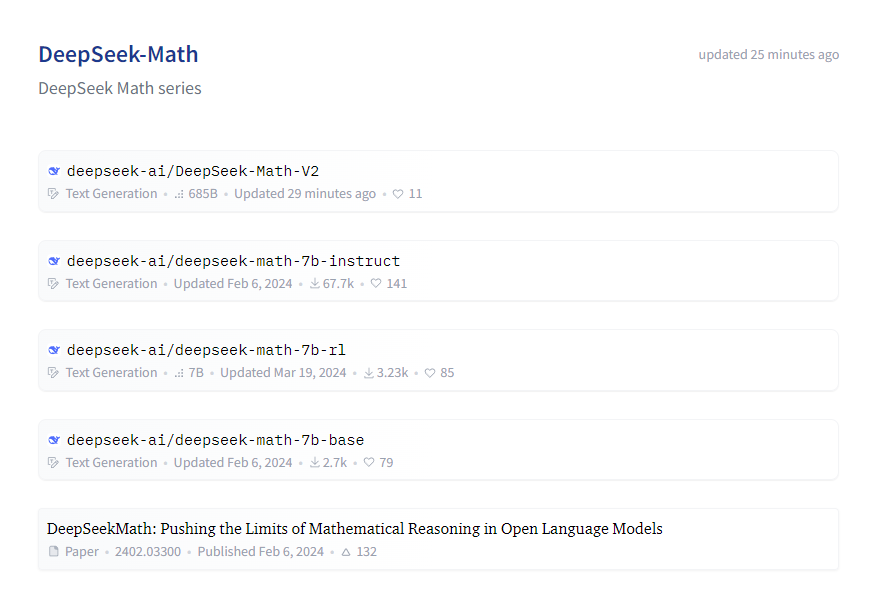
DeepSeek 表示,它的性能优于 Gemini DeepThink,实现了 IMO 金牌级的水平。
-
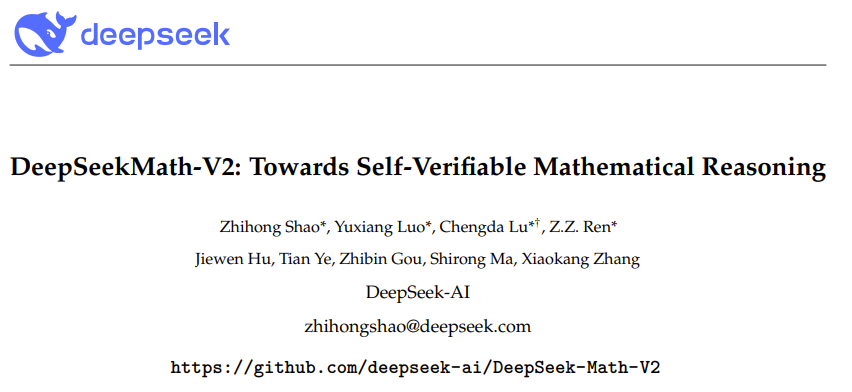
论文标题:DeepSeekMath-V2: Towards Self-Verifiable Mathematical Reasoning
-
论文地址:https://github.com/deepseek-ai/DeepSeek-Math-V2/blob/main/DeepSeekMath_V2.pdf
-
核心作者:邵智宏、Yuxiang Luo、Chengda Lu、Z.Z. Ren
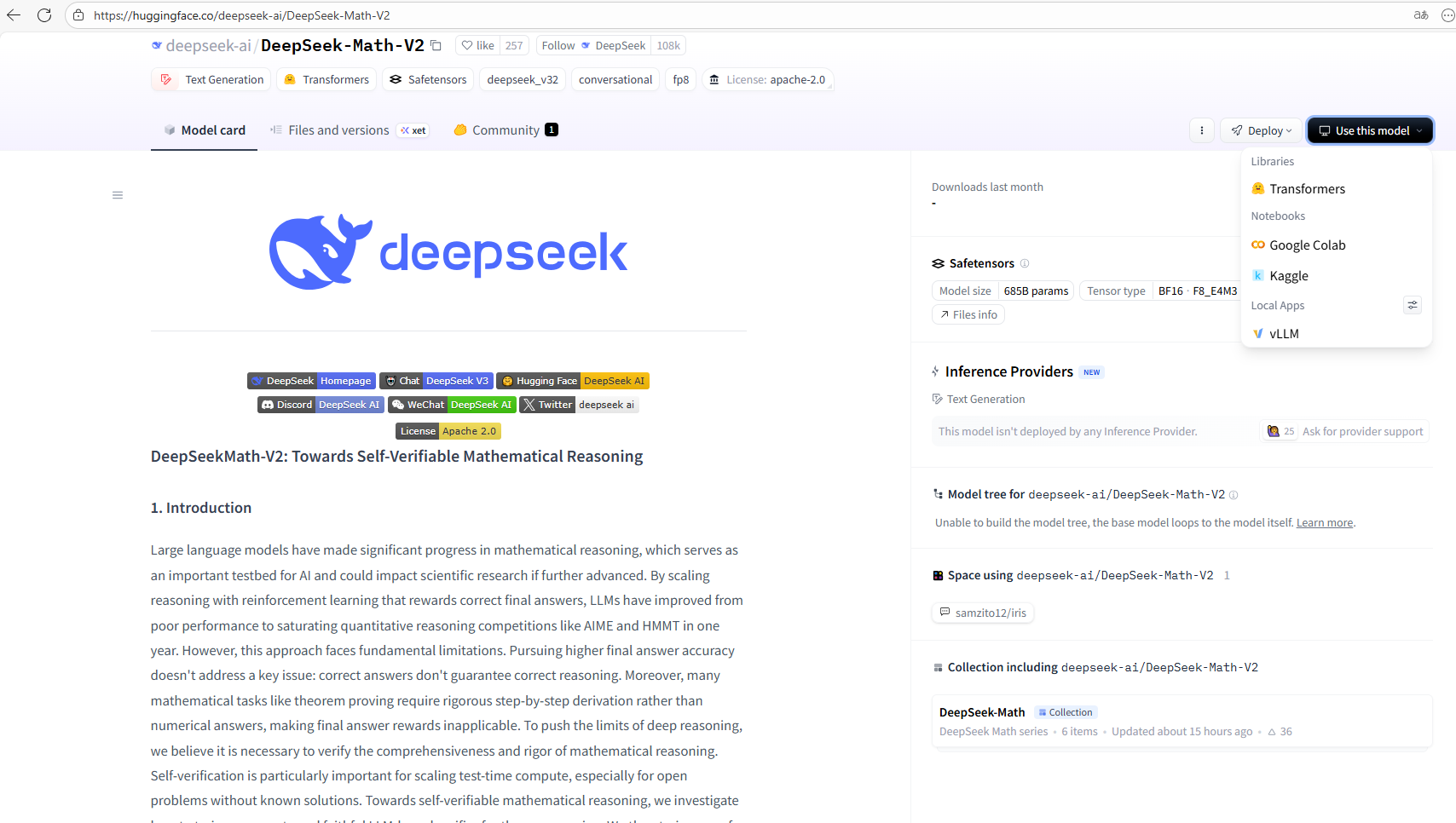
论文开篇,DeepSeek 就指出了当前 AI 在数学推理方面的研究局限:以正确的最终答案作为奖励,过于追求最终答案准确度。
这种做法虽然能让推理模型在 AIME 和 HMMT 等基准上达到更高水平,乃至达到饱和,但 DeepSeek 表示这并不能解决核心问题:正确答案并不保证推理过程正确。此外,许多数学任务(如定理证明)需要严谨的逐步推导,而不仅仅是数值答案,这使得基于最终答案的奖励方法不适用。
为了推动深度推理的极限,DeepSeek 认为有必要验证数学推理的全面性和严谨性。
他们指出:「自我验证在扩展测试时的计算规模时尤为重要,特别是对于没有已知解的开放性问题。」
为了实现可自我验证的数学推理,DeepSeek 研究了如何训练一个准确且可信赖的基于 LLM 的定理证明验证器。然后,他们使用该验证器作为奖励模型来训练证明生成器,并激励生成器在最终完成证明前尽可能发现并解决自身证明中的问题。
为了在生成器能力增强时保持生成 - 验证差距,DeepSeek 提出扩展验证计算能力,以自动标注新的难以验证的证明,从而生成训练数据进一步提升验证器性能。
简单来说,DeepSeek 这篇论文的核心目标不仅仅是让 AI 做对题,而是让 AI 「不仅会做,还能自己检查,甚至能诚实地承认自己哪里做错了」。
为了实现这一点,他们设计了一套由三个关键角色组成的系统,我们可以用一个「学生 — 老师 — 督导」的类比来理解:
首先,培养合格的「阅卷老师」(Proof Verification)。这个“阅卷老师”不再是简单判断对错,而是具备了类似人类专家的评分能力:
class AdvancedProofVerifier:
    def __init__(self, base_model, scoring_policy):
        self.model = base_model
        # 多维度评分策略
        self.scoring_policy = {
            'logical_flow': 0.3,      # 逻辑连贯性
            'theorem_application': 0.25, # 定理应用准确性
            'step_rigor': 0.25,       # 步骤严谨性
            'innovation': 0.2         # 证明创新性
        }

    def hierarchical_scoring(self, proof, reference):
        # 生成详细的分析报告
        analysis_report = self._generate_detailed_analysis(proof)

        # 多维度量化评估
        dimension_scores = {}
        for dimension, weight in self.scoring_policy.items():
            score = self._evaluate_dimension(proof, reference, dimension)
            dimension_scores[dimension] = score * weight

        # 综合评分算法
        overall_score = sum(dimension_scores.values())

        # 三档离散化处理
        if overall_score >= 0.85:
            final_score = 1.0  # 完美证明
        elif overall_score >= 0.6:
            final_score = 0.5  # 部分正确
        else:
            final_score = 0.0  # 根本错误

        return {
            'score': final_score,
            'analysis': analysis_report,
            'breakdown': dimension_scores
        }
过去训练 AI 数学模型,通常只看最后的答案对不对。但在高等数学证明题(如奥数)中,过程严谨比答案更重要。因此,DeepSeek 团队首先训练了一个专门的验证器(Verifier),也就是「阅卷老师」。这个验证器的创新之处在于其层次化评分机制,它不仅判断证明的正确性,还评估证明的“质量”。像人类专家一样把证明过程分为三档 :
-
1 分:完美,逻辑严密。
-
0.5 分:大体正确,但有小瑕疵或细节遗漏。
-
0 分:有根本性的逻辑错误或严重缺失。
不仅给分,还要写评语:模型被要求在打分前,先写一段分析,指出哪里好、哪里有问题 。
接下来,给老师配个「督导」(Meta-Verification)。
DeepSeek 发现了一个问题:阅卷老师有时候会胡乱扣分,它可能给了个低分,但指出的错误其实根本不存在(也就是产生了幻觉)。
为了解决这个问题,他们引入了元验证(Meta-Verification)机制,相当于给老师配了个「督导」。督导的任务不是看考卷,而是专门检查老师写的「评语」是否合理。这样可以双重确认:督导会检查老师指出的错误是否真实存在,以及扣分是否符合逻辑。效果上,通过训练模型既能当老师又能当督导,AI 评估证明的准确性和可信度大幅提升。
class MetaVerificationSystem:
    def __init__(self, verifier_model, consistency_checker):
        self.verifier = verifier_model
        self.consistency_checker = consistency_checker

    def verify_verifier_judgment(self, proof, verification_result):
        # 检查评语与证明的一致性
        consistency_analysis = self._analyze_consistency(
            verification_result['analysis'],
            proof
        )

        # 检测验证器幻觉模式
        hallucination_risk = self._detect_hallucination_patterns(
            verification_result, proof
        )

        # 置信度校准算法
        confidence_level = self._calibrate_confidence(
            consistency_analysis,
            hallucination_risk
        )

        # 生成修正建议(如果需要)
        if confidence_level < 0.7:
            correction = self._generate_correction_suggestion(
                verification_result, proof
            )
        else:
            correction = None

        return {
            'verification_quality': confidence_level,
            'correction_suggestion': correction,
            'risk_indicators': self._identify_risk_indicators(verification_result)
        }

    def _analyze_consistency(self, analysis, proof):
        # 实现基于逻辑一致性的分析算法
        extracted_claims = self._extract_claims_from_analysis(analysis)
        proof_structure = self._parse_proof_structure(proof)

return self._compute_structural_consistency(extracted_claims, proof_structure)然后,培养会「自省」的学生(Proof Generation with Self-Verification)。
有了好的阅卷系统,接下来就是训练做题的「学生」(生成器)。这里有一个非常关键的创新:诚实奖励机制。也就是说,它不仅做题,还要自评:模型在输出解题过程后,必须马上跟上一段「自我评价」,自己给自己打分(0、0.5 或 1)。
它会对诚实进行奖励:
-
如果模型做错了,但它在自评中诚实地指出了自己的错误,它会得到奖励 。
-
相反,如果它做错了却硬说自己是对的(盲目自信),或者试图「蒙混过关」,就会受到惩罚(得不到高奖励)。
class SelfVerifyingProofGenerator:
    def __init__(self, generator, verifier, honesty_reward_module):
        self.generator = generator
        self.verifier = verifier
        self.honesty_reward = honesty_reward_module

    def generate_with_integrity(self, problem_statement):
        # 生成多个证明候选
        proof_candidates = self._generate_diverse_proofs(problem_statement, k=5)

        enhanced_proofs = []
        for proof in proof_candidates:
            # 自我评估
            self_assessment = self._conduct_self_assessment(proof, problem_statement)

            # 诚实度计算
            integrity_score = self.honesty_reward.compute_integrity_score(
                proof, self_assessment
            )

            # 证明质量评估
            proof_quality = self.verifier.evaluate_proof(proof, problem_statement)

            enhanced_proofs.append({
                'proof': proof,
                'self_assessment': self_assessment,
                'integrity_score': integrity_score,
                'quality_score': proof_quality['score'],
                'combined_score': self._compute_combined_score(integrity_score, proof_quality)
            })

        # 选择最优证明(平衡正确性和诚实度)
        return self._select_optimal_proof(enhanced_proofs)

    def _compute_integrity_reward(self, proof, self_assessment, ground_truth):
        """
        基于信息论的诚实奖励计算
        核心思想:奖励诚实的行为,即使答案错误
        """
        if self_assessment['score'] == 0 and ground_truth['score'] == 0:
            # 诚实承认错误:高奖励
            return self._compute_honesty_bonus(proof, self_assessment)
        elif self_assessment['score'] > 0 and ground_truth['score'] == 0:
            # 盲目自信:严厉惩罚
            return -self._overconfidence_penalty(self_assessment)
        elif self_assessment['score'] == ground_truth['score']:
            # 正确评估:基础奖励
            return self._baseline_reward(proof)
        else:
            # 其他情况:适度奖励
            return self._partial_reward(proof, self_assessment, ground_truth)
这样做的目的是可以迫使 AI 在输出答案前进行深度思考,试图发现并修正自己的错误,直到它认为自己真的做对了为止 。
最后,形成自动化闭环(Synergy)。
人类专家没法给成千上万道奥数题写详细的步骤评分,所以 DeepSeek 设计了一套自动化流程,让系统「左右互搏」来自我进化 :
-
海量生成:让「学生」对同一道题生成很多种解法。
-
集体投票:让「老师」对这些解法进行多次评估。如果大多数评估都认为某个解法有问题,那就判定为有问题;如果没有发现任何漏洞,才判定为正确 。
-
以战养战:通过这种方式,系统自动筛选出那些很难判卷或很难做对的题目,变成新的教材,重新训练「老师」和「学生」。这样,随着「学生」解题能力变强,「老师」的眼光也越来越毒辣 。
总之,DeepSeekMath-V2 的方法本质上是从「结果导向」转向了「过程导向」。它不依赖大量的数学题答案数据,而是通过教会 AI 如何像数学家一样严谨地审查证明过程(包括审查它自己),从而在没有人类干预的情况下,也能不断提升解决高难度数学证明题的能力 。
训练框架的工程实现
自我验证强化学习(Self-Verification RL)
DeepSeek提出了一种全新的训练范式,将传统RLHF扩展为包含自我验证的强化学习:
class SelfVerificationRLTrainer:
    def __init__(self, generator, verifier, meta_verifier, reward_composer):
        self.generator = generator
        self.verifier = verifier
        self.meta_verifier = meta_verifier
        self.reward_composer = reward_composer

    def training_step(self, batch_of_problems):
        total_loss = 0

        for problem in batch_of_problems:
            # 生成阶段:产生多个证明变体
            generated_proofs = self.generator.generate_with_self_verification(problem)

            # 验证阶段:并行验证所有证明
            verification_results = self._parallel_verification(generated_proofs)

            # 元验证阶段:确保验证质量
            meta_verification_results = self.meta_verifier.batch_verify(verification_results)

            # 多目标奖励计算
            composite_rewards = self.reward_composer.compute(
                generated_proofs,
                verification_results,
                meta_verification_results
            )

            # 策略优化
            policy_loss = self._update_generator_policy(composite_rewards)
            total_loss += policy_loss

        return total_loss / len(batch_of_problems)

    def _compute_composite_rewards(self, proofs, verifications, meta_verifications):
        """
        复合奖励函数设计:
        - 40% 基于最终正确性
        - 35% 基于诚实度
        - 25% 基于证明过程的质量
        """
        rewards = {
            'correctness': self._correctness_reward(proofs, verifications),
            'integrity': self._integrity_reward(proofs, verifications, meta_verifications),
            'process_quality': self._process_quality_reward(verifications)
        }

        # 加权组合
        composite_reward = (
            0.4 * rewards['correctness'] +
            0.35 * rewards['integrity'] +
            0.25 * rewards['process_quality']
        )

        return composite_reward
课程学习与难度渐进
class MathematicalReasoningCurriculum:
    def __init__(self):
        self.difficulty_levels = {
            'basic': {
                'max_proof_length': 3,
                'allowed_theorems': ['basic_algebra', 'simple_geometry'],
                'conceptual_complexity': 1
            },
            'intermediate': {
                'max_proof_length': 6,
                'allowed_theorems': ['advanced_algebra', 'trigonometry'],
                'conceptual_complexity': 2
            },
            'advanced': {
                'max_proof_length': 10,
                'allowed_theorems': ['calculus', 'number_theory'],
                'conceptual_complexity': 3
            },
            'olympiad': {
                'max_proof_length': 15,
                'allowed_theorems': ['all_standard', 'creative_applications'],
                'conceptual_complexity': 4
            }
        }

    def adapt_difficulty(self, current_performance):
        """
        基于当前表现自适应调整难度
        """
        if current_performance['basic'] > 0.9 and current_performance['intermediate'] > 0.8:
            return self._promote_to_level('advanced')
        elif current_performance['basic'] > 0.85:
            return self._promote_to_level('intermediate')
        else:
            return 'basic'
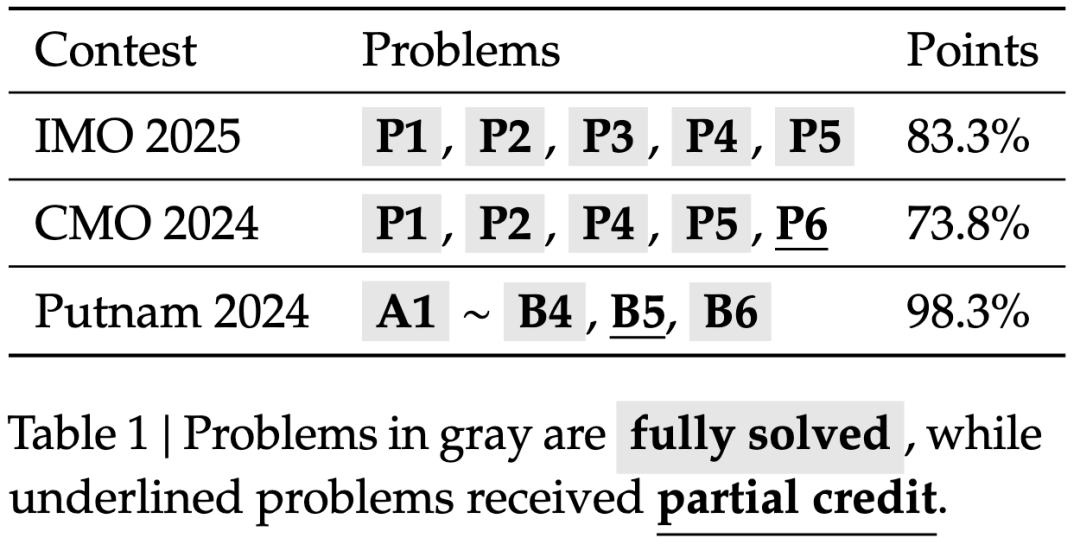
最终,他们得到了 DeepSeekMath-V2 模型,其展现出了强大的定理证明能力:DeepSeekMath-V2 模型不仅在 IMO 2025 和 CMO 2024 上取得金牌级成绩,而且还在 Putnam 2024 中以扩展测试计算实现了接近满分的 118/120。
下图展示了 DeepSeekMath-V2 在 IMO-ProofBench 基准(这是 IMO Bench 的一个子集,其中包含 60 道证明题)上的表现,可以看到,在其中的 Basic 基准上,DeepSeekMath-V2 不仅远胜过其它模型,甚至达到了近 99% 的惊人高分。而在更难的 Advanced 子集上,DeepSeekMath-V2 略逊于 Gemini Deep Think (IMO Gold)。
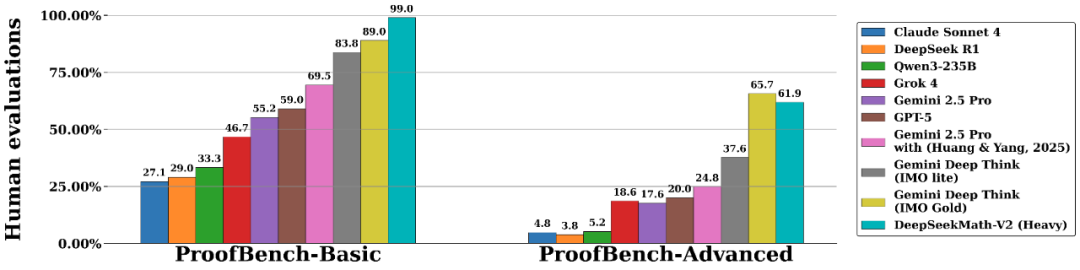
些结果不仅体现了模型在数学推理方面的强大能力,更重要的是展示了其证明过程的严谨性。特别是在Putnam竞赛中接近满分的表现,说明模型已经掌握了高等数学证明的精髓。
DeepSeek 表示:「虽然仍有大量工作需要推进,但这些结果表明,可自我验证的数学推理是一个可行的研究方向,有望推动更强大数学 AI 系统的发展。」
技术深度:核心算法解析
可验证推理的形式化基础
DeepSeek-Math-V2的架构建立在一个严谨的形式化系统之上:
其中:
-
P: 证明生成系统(Proof Generator)
-
V: 验证系统(Verifier)
-
M: 元验证系统(Meta-Verifier)
-
R: 奖励机制(Reward System)
这个系统满足以下重要性质:
-
可验证完整性(Verifiable Completeness)
-
诚实完备性(Honesty Completeness)
-
误差有界性(Bounded Error)
幻觉检测的机器学习方法
class HallucinationDetector:
    def __init__(self, pattern_library, anomaly_detector):
        self.patterns = pattern_library
        self.anomaly_detector = anomaly_detector

    def detect_hallucination_patterns(self, verification_result, proof):
        # 基于模式的幻觉检测
        pattern_based_scores = self._pattern_based_detection(verification_result)

        # 基于异常检测的方法
        anomaly_scores = self._anomaly_detection(verification_result, proof)

        # 多模态融合
        combined_risk_score = self._fusion_algorithm(pattern_based_scores, anomaly_scores)

        return {
            'risk_level': combined_risk_score,
            'pattern_indicators': self._identify_specific_patterns(verification_result),
            'confidence': self._compute_detection_confidence(combined_risk_score)
        }
工程优化与性能提升
计算效率优化策略
为了应对三重验证带来的计算开销,DeepSeek实现了多项优化:
class ComputationalOptimizer:
    def __init__(self, pruning_strategy, distillation_module):
        self.pruning_strategy = pruning_strategy
        self.distillation = distillation_module

    def optimize_verification_pipeline(self, proof, problem):
        # 早期终止策略
        if self._should_early_terminate(proof):
            return {'score': 0, 'optimized': True}

        # 验证器蒸馏
        lightweight_verifier = self.distillation.create_lightweight_version()

        # 增量验证
        incremental_results = self._incremental_verification(proof)

        return {
            'verification_result': incremental_results,
            'computation_saved': self._compute_savings(),
            'quality_maintained': self._assess_quality_preservation()
        }
行业影响
理论贡献的重估
DeepSeek-Math-V2的贡献远不止于又一个SOTA模型。它提出了一个根本性问题:AI推理的可信度如何保证?
传统方法依赖最终答案的正确性,但这在复杂推理任务中是不够的。DeepSeek的自我验证机制为解决这一问题提供了具体的技术路径。
对AI推理研究的启示
-
从端到端到可验证推理:证明了分阶段验证架构的可行性
-
诚实作为优化目标:开创了AI伦理与技术融合的新方向
-
递归验证体系:为复杂系统的可靠性保障提供了新思路
实际应用前景
这项技术有望在以下领域产生重大影响:
-
自动定理证明:推动数学研究的发展
-
教育技术:提供个性化的数学辅导
-
程序验证:确保软件系统的正确性
-
科学发现:辅助科学研究中的推理过程
结论:迈向可信AI的重要一步
DeepSeek-Math-V2代表着AI推理能力的一个里程碑。它不仅展示了AI在复杂数学推理方面的卓越能力,更重要的是提出了一种确保推理过程可信度的技术框架。
这项工作的深远意义在于,它开始让AI具备类似人类的“元认知”能力——能够反思自己的推理过程,识别并纠正错误。这种能力是通向真正智能系统的关键。
当AI学会诚实地承认“我不知道”或“我可能错了”时,我们离构建真正可靠、可信的AI系统就更近了一步。DeepSeek-Math-V2在这条道路上迈出了坚实而重要的一步。
数学的真理不在于从不犯错,而在于拥有发现和纠正错误的能力。DeepSeek-Math-V2让AI首次真正掌握了这种能力。

中国智能体开发者社区,聚焦智能体与大模型开发,提供前沿资讯、实用工具链、开源项目及行业案例。通过技术沙龙、开发者大赛等活动,促进经验交流与协作,助力开发者快速构建创新智能应用。
更多推荐


 31
31 0
0- 0


 已为社区贡献14条内容

所有评论(0)